Sonderkommando Kulmhof

Record of May 5, 1944
Contemporary Source

1944-05-05 The Feldscher Aktion Reveals the Decimation of Jewish Children in the Nazi-occupied East

The Feldscher Aktion, named after Swiss diplomat Peter Anton Feldscher, represented a significant diplomatic effort by the British government during World War II to secure the emigration of 5,000 Jewish individuals, primarily children, from Nazi-controlled territories. In a memo dated May 5, 1944, Eberhard von Thadden, the Jewish Affairs Referent of the German Foreign Office, noted that “the Reich Security Main Office confidentially communicated that the 5,000 Jewish children eligible for emigration were now only available in the Litzmannstadt ghetto. However, this ghetto would soon be dissolved by order of the Reichsführer-SS.”

Memo of 8 July 1942
Contemporary Source

1942-07-08 Iron and Fuel: Sonderkommando Kulmhof’s Negotiations with the Ghetto Lodz Administration on Supplies for Extermination Operations

On 8 July 1942, Albert Plate from the Sonderkommando Kulmhof discussed with the Ghetto Lodz Administration regarding the supply of cement, iron girders, and railroad tracks necessary for constructing open-air cremation furnaces in the forest camp of the extermination site. The Sonderkommando required a total of 30 tons of iron. In turn, Plate committed provision of 2,000 kg of diesel fuel to the Ghetto Lodz Administration to fuel the trucks used for transporting the belongings of murdered Jews to the sorting camp in Pabianice. Later, Ghetto Administration head Hans Biebow confirmed with Sonderkommando leader Hans Bothmann that they would receive 5,000 liters each of gasoline and diesel fuel.

Memo of October 18, 1944
Contemporary Source

1944-10-18 Insights from RSHA Memo: Polish people “fear that they, similar to the Jewish people, are to be annihilated in their ethnic substance”

Memo by SS-Sturmbannführer Herbert Strickner, head of RSHA Department III (Volkstum, or Ethnicity), analyzing occupation policy from 1939 to 1944 and outlining considerations for reorganizing Polish policy. The document, dated October 18, 1944, explores various approaches to manage the Polish population, with a particular focus on the Generalgouvernement. Strickner notes that “a final and official decision on the ultimate fate of the Polish people was not reached” and the Polish people “fear that they, similar to the Jewish people, are to be annihilated in their ethnic substance.”

Letter from April 16, 1942
Contemporary Source

1943-04-16 A Missing Drive Belt Unveils Łódź Ghetto Administration’s Complicity in Chełmno Operations

On April 16, 1943, Hans Biebow, head of the Nazi’s Łódź (Litzmannstadt) Ghetto Administration, penned a letter to Friedrich Ribbe regarding the retrieval of a “transmission belt” promised by Sonderkommando Kulmhof. His letter contained a revealing remark that inadvertently exposed the Ghetto Administration’s complicity in the Chełmno extermination process: “The Gestapo has us to thank that the operation out there in K[ulmhof] ran smoothly.” Biebow urged Ribbe to discuss the issue with Alfons Rosse, the deputy head of the Gestapo in Litzmannstadt. Ribbe’s inquiry revealed that the transmission belt is no longer available, as it has been taken by SS-Standartenführer Paul Blobel, the commander of Aktion 1005.

Radio message of July 15, 1942
Contemporary Source

1942-07-15 Flamethrower Requested by Blobel for Mass Grave Disposal Trials at Chełmno Extermination Camp

On 15 July 1942, SS-Obersturmbannführer Ernst Fick, commander of the Sennheim training camp, requested a portable flamethrower unit from the SS Cavalry Brigade at the Waffen-SS training camp in Dębica to be provided to SS-Standartenführer Paul Blobel’s Sonderkommando 1005. Blobel subsequently tested the effectiveness of the flamethrower for corpse disposal at the Chełmno/Kulmhof extermination camp.

Recorded Radio Message of September 15, 1942
Contemporary Source

1942-09-15 Auschwitz Delegation Visits Chełmno / Kulmhof: Inspection of Field Ovens and Discussion on Implementation at Auschwitz

According to a radio message from September 15, 1942 and a trip report dated September 17, 1942, on 16 September 1942, a delegation from Auschwitz — consisting of Commandant SS-Obersturmbannführer Rudolf Höß, SS-Untersturmführer Franz Hößler, who was responsible for clearing mass graves, and SS-Untersturmführer Walther Dejaco from the Central Construction Office — visited Litzmannstadt to inspect “the test station for field ovens as part of Aktion Reinhard”, i.e. the open air cremation furnaces at the Kulmhof / Chełmno extermination camp The group examined the “special facility” and discussed its implementation at Auschwitz with SS-Standartenführer Paul Blobel. Blobel also ordered the delivery of “construction materials” and reserved a “ball mill for substances for Auschwitz concentration camp.”

Affidavit of Franz Bock on Chelmno extermination camp
Contemporary Source

1942-05-05 Franz Heinrich Bock’s Diary on the Deportation of Jews to Chełmno / Kulmhof Extermination Camp

Between 1940 and 1942, Franz Heinrich Bock served as Mayor and Official Commissioner of the Polish village of Poddębice. During this period, he kept a detailed diary documenting his experiences in Nazi occupied Poland, which was later published in 1961 under the pseudonym Alexander Hohenstein, with names of people and places changed (Poddębice became “Poniatowec”). On May 12, 1942, Bock described the visit of an SS officer to Poddębice, who came to oversee the collection of belongings left behind by the deported Jews. During their conversation, the SS officer disclosed that the Jews were killed in “specially constructed trucks” that “quickly and painlessly” kill those inside. The following day, Bock traveled to the Łódź Ghetto Administration to negotiate financial compensation for the deportation.

Contemporary Source

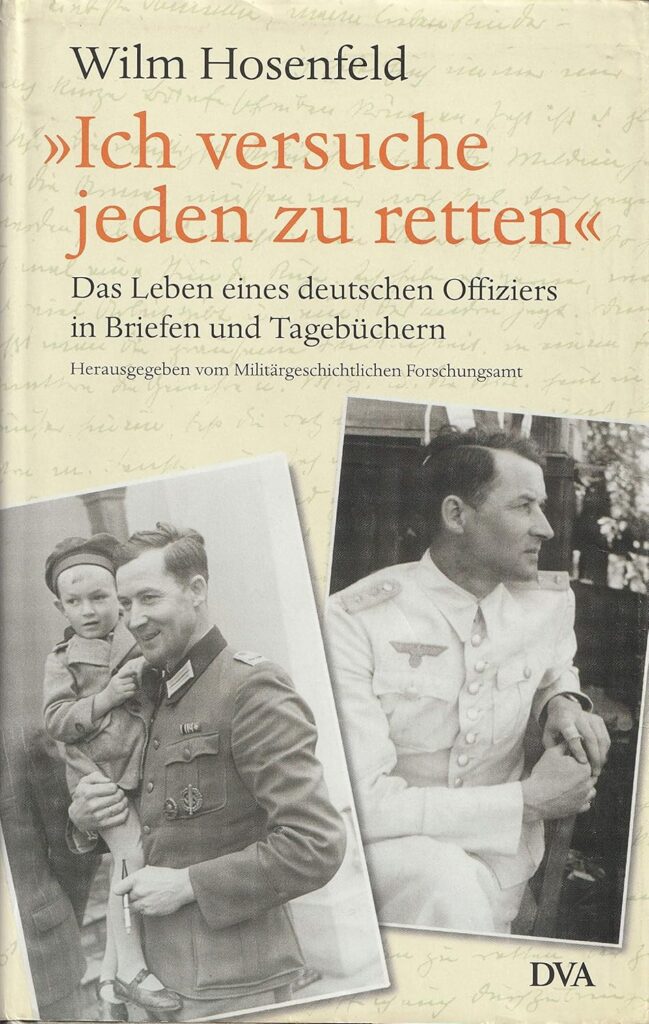
1942-07-23 The Dairy of Wilm Hosenfeld: A Wehrmacht Officer’s Account of Jews Killed by Gas Vans in the Warthegau

Wilm Hosenfeld, a German officer stationed in Warsaw during World War II, recounts in a diary entry of 23 July 1942 the actions of the German occupation, particularly the extermination of Jewish communities in occupied and annexed Polish territories. Hosenfeld learned specifically that “From Litzmannstadt and Kutno, it is said that Jews – men, women, and children – are poisoned in mobile gas vans, their clothes stripped from their corpses, and their bodies thrown into mass graves, with the clothing being sent to textile factories for reuse”.

Contemporary Source

1942-05-23 Ghetto Łódź Administration Supplies Chlorinated Lime and Cement for Sonderkommando Kulmhof’s Special Action

In June and July 1942, the Ghetto Łódź Administration delivered large quantities of chlorinated lime and cement to the Sonderkommando at Kulmhof, according to the invoices addressed to the Secret State Police S[Sonderkommando] and internal correspondence of the administration. The materials were picked up by truck at the loading point at Baluter Ring (Balucki Rynek). For instance , on 21 July 1942 Sonderkommando member Erich Kretschmar confirmed the “receipt of 100 sacks of cement (one hundred) from the warehouse of the Ghetto Administration at Baluterring for the SS special operation”. The chlorinated lime was used to disinfect the mass burial sites, the cement was required for constructing the furnaces used for body disposal.

Note by Luchterhand dated May 23, 1942
Contemporary Source

1942-03-31 Invoice for 5 Barrels of Chlorinated Lime Delivered to Warthbrücken, Near the Kulmhof Extermination Camp (Chełmno)

In March 1942, the Inspector of the Health Service under the Reich Commissary for the Consolidation of German Folk ordered 1,641 kg of chlorinated lime, which was commonly used as a disinfectant. The delivery was processed by Kopernikus Pharmacy in Posen and billed on 31 March 1942. The payment for the shipment, which was unloaded at Warthbrücken, the nearest train station to the Kulmhof extermination camp (Chełmno), was made through the special account of the Ghetto Administration in Litzmannstadt (Łódź Ghetto) through which the extermination camp was funded.

Scroll to Top